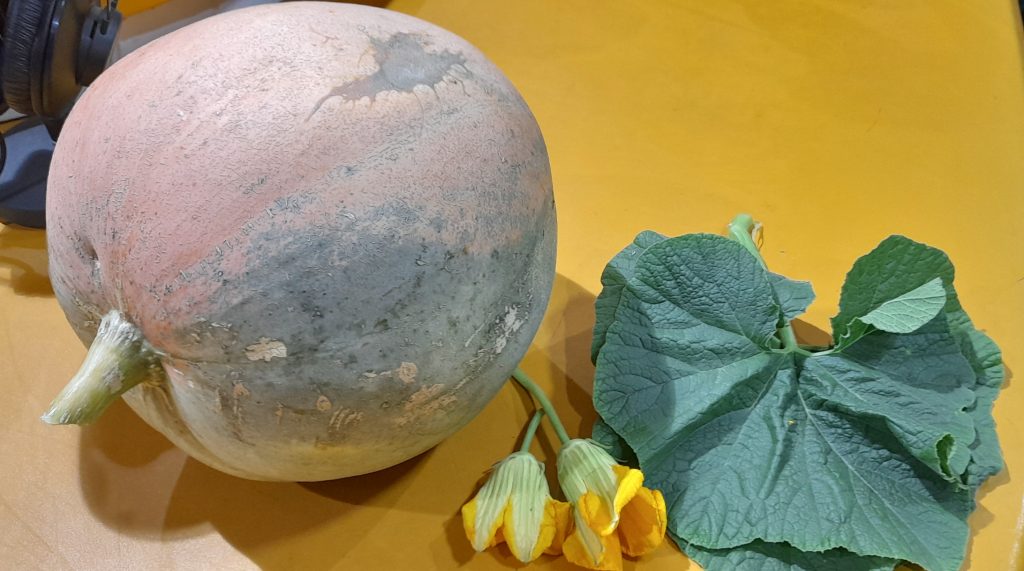
Pumpkin is a type of winter squash that belongs to the Cucurbitaceae family.
It’s native to North America and particularly popular around Thanksgiving and Halloween.
In the US, pumpkin typically refers to Cucurbita pepo, an orange type of winter squash. In other regions, such as Australia, pumpkin may refer to any type of winter squash (Healthline)
Among the people of Northern Ghana, pumpkin is a delicious vegetable that is consumed in most households as a seasonal food. Yoka, as it is called by the Frafa speaking people of the Upper East Region, is only found or available in the early months after the raining season, between December and March.
Because of its nutritional value, one only needs enough groundnut and small ingredients to prepare it. Pumpkin is densed with enough water to prepare its own food. One needs no salt when preparing pumpkin. Pumpkin is preferably prepared using the local ceramic pot (dugu-menka) using firewood. It loses its taste when cooked in an aluminum or metallic pot using charcoal or gas (Mr. Steven Gariba)
To enjoy your pumpkin meal, a little touch of Shea Butter will cause salivation even before eating. It is mostly eating as a whole meal without the usual accompanying Tuo zaafi (T.Z). Pumpkin meal is mostly served in a local ceramic bowl (la-menka).
While commonly viewed as a vegetable, pumpkin is scientifically a fruit, as it contains seeds. That said, it’s nutritionally more similar to vegetables than fruits (Healthline).
Beyond its delicious taste, pumpkin is nutritious and linked to many health benefits.
1. Highly Nutritious and Particularly Rich in Vitamin A:
Besides being packed with vitamins and minerals, pumpkin is also relatively low in calories, as it’s 94% water. It’s also very high in beta-carotene, a carotenoid that your body turns into vitamin A. Moreover, pumpkin seeds are edible, nutritious and linked to numerous health benefits.
2.High Antioxidant Content May Reduce Your Risk of Chronic Diseases.
Pumpkins contain antioxidants, such as alpha-carotene, beta-carotene and beta-cryptoxanthin. These can neutralize free radicals, stopping them from damaging your cells. Test-tube and animal studies have shown that these antioxidants protect skin against sun damage and lower the risk of cancer, eye diseases and other conditions (Healthline). However, keep in mind that more human-based research is needed to make health recommendations.
3. Pumpkin is loaded with nutrients that can boost your immune system.
For one, it’s high in beta-carotene, which your body turns into vitamin A. Studies show that vitamin A can strengthen your immune system and help fight infections. Conversely, people with a vitamin A deficiency can have a weaker immune system. Pumpkin is also high in vitamin C, which has been shown to increase white blood cell production, help immune cells work more effectively and make wounds heal faster. Aside from the two vitamins mentioned above, pumpkin is also a good source of vitamin E, iron and folate — all of which have been shown to aid the immune system as well (Healthline).
4. Nutrient Density and Low Calorie Count May Promote Weight Loss.
Pumpkin is considered a nutrient-dense food. That means it’s incredibly low in calories despite being packed with nutrients. In fact, pumpkin clocks in at under 50 calories per cup (245 grams) and consists of about 94% of water. Simply put, pumpkin is a weight-loss friendly food because you can consume more of it than other carb sources — such as rice and potatoes — but still take in fewer calories. What’s more, pumpkin is a good source of fiber, which can help curb your appetite (Healthline).
5. Potassium, Vitamin C and Fiber May Benefit Heart Health.
Pumpkin contains a variety of nutrients that can improve your heart health. It’s high in potassium, vitamin C and fiber, which have been linked to heart benefits. For instance, studies have shown that people with higher potassium intakes appear to have lower blood pressure and a reduced risk of strokes — two risk factors for heart disease (Healthline).
Pumpkin during this time of the season (December-February), can easily be gotten from many farms in the rural parts of the Upper East Region and some urban areas.
It is not easily available in the market but can be gotten in churches where farmers bring it as part of their farm produce to thank God.
A good friend or samaritan may as well help you with one or two to enjoy the season.
In my next article, I will talk more about the health benefits of pumpkin leaves.
By: Simon Agana Blessing:mywordfmonline.com