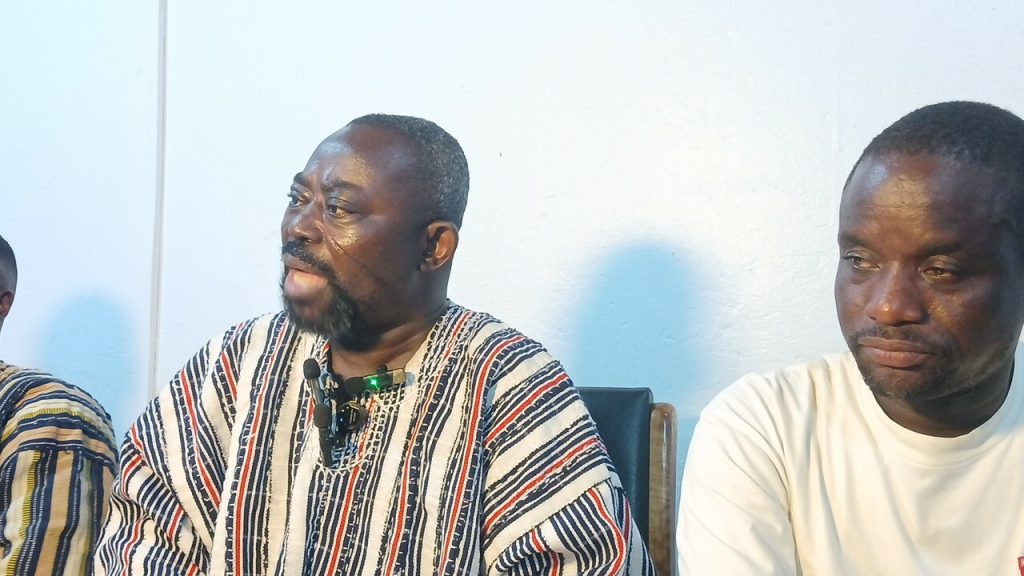
The New Patriotic Party (NPP) Regional Communications Officer for the Upper East Region, Mr. Peter Ayinbisah Ayamga, has chastised the 15 Members of Parliament (MPs) from the Upper East Region who represent the National Democratic Congress (NDC) for failing to address the reported exclusion of the region from a 500 million US dollar World Bank loan facility dated 28 May 2026.
Mr. Ayamga’s remarks follow the approval by Ghana’s Parliament in July 2026 of a 500 million US dollar International Development Association (IDA) credit facility from the World Bank for the Ghana Market Access and Connectivity Project (GMACP). The project aims to rehabilitate rural feeder roads across nine regions, directly benefiting more than 550,000 people, including approximately 350,000 farmers, 250,000 women, and 310,000 youth.The GMACP is expected to generate about 25,000 short-term direct jobs through civil works and road maintenance activities.
Implemented over five years by the Ministry of Roads and Highways, the project will support the rehabilitation and maintenance of more than 1,000 kilometers of rural roads across four clusters covering the Upper West, Northern, Savannah, Oti, Volta, Eastern, Ashanti, Bono, Bono East, Western North, Western, Central and Ahafo regions.The project targets improvement in all-season access to reduce transport costs, shorten travel times, increase supply reliability, and open larger markets to smallholder farmers. Ultimately, this is expected to reduce post-harvest losses, strengthen agricultural value chains, contribute to lower food prices, and improve food security.
The Upper East Regional Communication Directorate of the NPP has also taken note of a request by the Minister for Finance, Hon. Dr. Cassiel Ato Forson, seeking parliamentary approval under Article 181 of the 1992 Constitution for a US$500 million IDA credit facility from the World Bank to finance the GMACP.While the Directorate welcomes genuine efforts by Government and its development partners to strengthen Ghana’s agricultural sector through strategic infrastructure investment, it is deeply disturbed by what it describes as the complete exclusion of the Upper East Region from this critical intervention.
After carefully studying the Memorandum laid before Parliament, the Directorate finds the exclusion “wholly unjustifiable,” inconsistent with the objectives of the project, and contrary to the principles of equitable national development.The beneficiary regions listed under the project include Upper West, Northern, Savannah, Oti, Volta, Eastern, Ashanti, Bono, Bono East, Western North, Western, Central and Ahafo.
Notably absent from this list is the Upper East Region, alongside the North East and Greater Accra Regions. The Directorate says it is difficult to comprehend the exclusion of the Upper East Region, considering the project’s objectives and the agricultural importance of the region.If the purpose of the facility is to improve agricultural market access and reduce post-harvest losses through the rehabilitation of feeder roads, the Upper East Region should have been among the foremost beneficiaries. The region is home to many productive farming communities, including Builsa South District—one of Ghana’s leading rice-producing areas—along with significant maize production. Farmers continue to face major challenges transporting their produce from farming communities to aggregation centres and commercial markets due to the deplorable condition of feeder roads.
Similar difficulties persist in parts of the Bongo District, where millet, sorghum, vegetables, and other crops are produced in large quantities, yet poor road infrastructure continues to undermine productivity and profitability.The Directorate further notes that the situation is particularly worrying within the Bawku enclave. Farmers in Bawku Municipality, Bawku West District, Binduri District, Garu District and Pusiga District are among the country’s leading producers of onions, tomatoes, pepper, and other vegetables that supply markets across northern Ghana and neighboring Burkina Faso. However, poor feeder roads continue to isolate many farming communities, especially during the rainy season, making transport costly, lowering farm-gate prices, and reducing the incomes of hardworking farmers.These are precisely the challenges that the GMACP was designed to address.
The Directorate therefore says it cannot reconcile the stated objectives of the project with the decision to omit the Upper East Region. It argues that any objective assessment based on agricultural production, rural accessibility, post-harvest losses, and feeder road deficits would place the Upper East Region among the most deserving of the intervention.
The Upper East Regional Communication Directorate is therefore calling for clarity on the objective criteria used to select the beneficiary regions and exclude the Upper East Region. It also calls on the Upper East Caucus in Parliament to provide a clear account to the people of the region about efforts made to secure the inclusion of the Upper East Region in this important national intervention, noting that Members of Parliament have duties that go beyond debates in the Chamber and the passage of laws.
The Directorate additionally urges effective lobbying, strategic engagement with Government, and sustained advocacy for development projects that improve the welfare of the people represented by the respective legislators.It further appeals to the Upper East Regional Minister, Hon. Donatus Atanga Akamugri; all Metropolitan, Municipal and District Chief Executives (MMDCEs) in the region; the Upper East Caucus in Parliament; traditional authorities; the media; civil society organizations; community development organizations; youth groups; and all well-meaning citizens of the Upper East Region to add their voices to this matter.
The Directorate emphasizes that development of the Upper East Region is a collective responsibility that must transcend partisan interests. Where opportunities that directly affect livelihoods are overlooked, it says every stakeholder has a duty to speak up, engage constructively, and advocate for fairness.It respectfully urges all stakeholders to unite in calling for a review of the beneficiary list to ensure that the Upper East Region receives the consideration it rightfully deserves.
The Upper East Regional Communication Directorate of the NPP therefore condemns, in the strongest terms, the exclusion of the Upper East Region from the Ghana Market Access and Connectivity Project. It calls on the Government of Ghana and the World Bank to immediately review the beneficiary list and include the Upper East Region before implementation begins.
Source:mywordfmonline.com/Gaspard Adongo Ayuureneeya