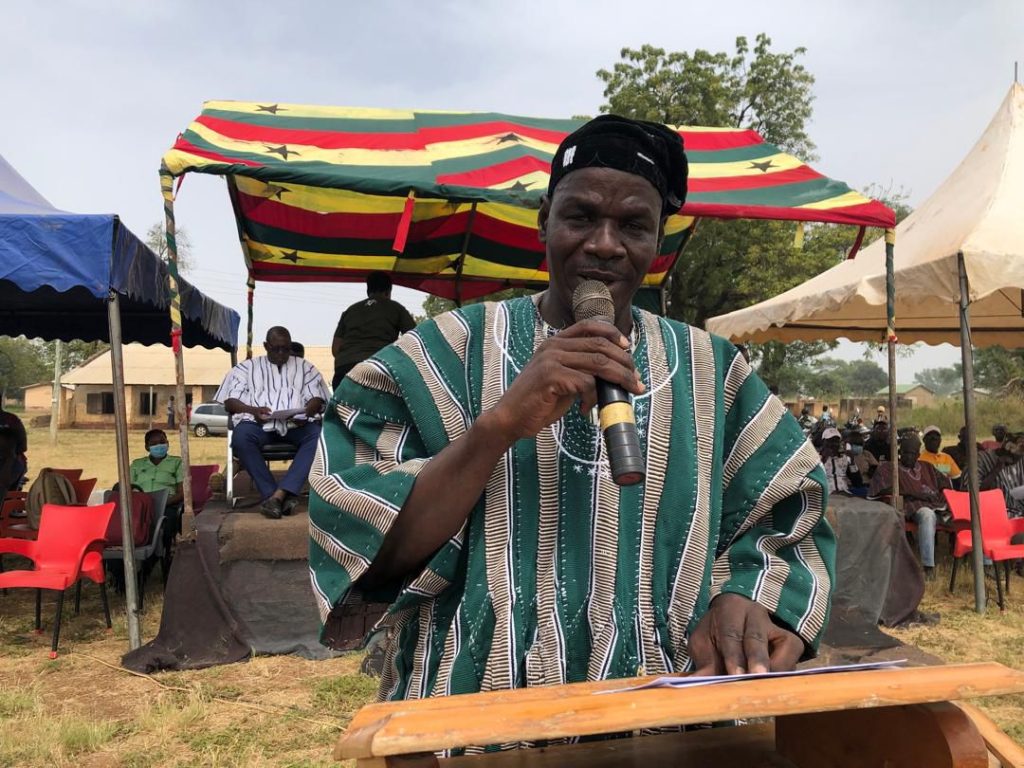
The district head of the Agriculture Department for the Talensi District, Mr. Sulemana Mathew, has indicated that over 6,109 farmers have registered for the government intervention program aimed at supporting those in Northern Ghana severely affected by a prolonged dry spell. He noted that this initiative is part of building a database of farmers in the country, with the registered farmers being potential beneficiaries of the Dry Spell intervention program. Although the government has released over 8 billion cedis for this fund, many farmers in the northern part of Ghana are still waiting to access it. Reports have also indicated that most rural farmers are unaware of this specific intervention aimed at helping those who were severely impacted by the dry spell crisis in August this year.
Mr. Mathew also mentioned that this year, under the Ghana Landscape Restoration and Small Scale Mining Project, the district supported farmers in seven communities: Gbane, Kpatia, Wuug, Gbeogo, Sepaat, Balungu, and Pwalugu. These communities underwent a watershed planning exercise where they identified their farming and environmental challenges and proposed solutions. Sub-project proposals were prepared and approved for these communities to implement various sustainable agricultural practices, such as contour ploughing, bunding of fields, the use of improved varieties, agroforestry, compost preparation, and good agronomic practices. A total of 1,329 farmers (559 males and 770 females) participated in the planning exercise. Additionally, 576 farmers (184 males and 392 females) benefited from improved maize, soya beans, and cowpea seeds, as well as fertilizer, equipment for compost preparation, assorted tree seedlings for environmental restoration, and extension services.
He added that demonstrations and farmer field schools (FFS) have proven to be effective means for promoting the understanding and adoption of agricultural technologies; hence, agriculture cannot thrive without demonstrations. Under the Ghana Landscape Restoration and Small Scale Mining Project, 10 demonstrations have been carried out with farmers, with a total of 3,132 participants (728 males and 1,404 females) attending field days organized for these demonstrations, which have shown yields higher than those of normal farming practices.
The district has also performed well in terms of home visits; these achievements would not have been possible without the Agricultural Extension Agents (AEAs) reaching out to farmers. There has been an improvement in extension coverage to deliver various messages to farmers. A total of 1,370 farm and home visits were conducted by AEAs, reaching 43,091 farmers (26,246 males and 17,584 females). These farmers received training on topics such as aflatoxin management and control, safe handling and efficient use of agrochemicals, the use of improved seeds, livestock husbandry practices, guinea fowl production, and environmental restoration through tree planting and natural regeneration.
Addressing farmers at the 40th National Farmers’ Ceremony at Tongo Primary School under the theme “Building Climate-Resilient Agriculture for Sustainable Food Security,” Mr. Mathew noted that CSIR-SARI and CSIR-Crop Research and Soil Research have collaborated with the department to establish adaptive trials on maize and groundnuts for controlling aflatoxins in these crops. This initiative has involved farmers in the communities to learn and apply these practices for improved and safe food free from aflatoxin contamination. A number of improved and high-yielding millet varieties, which are climate-smart, have also been introduced to farmers as a way to address erratic and protracted rainfall patterns that result in low millet yields.
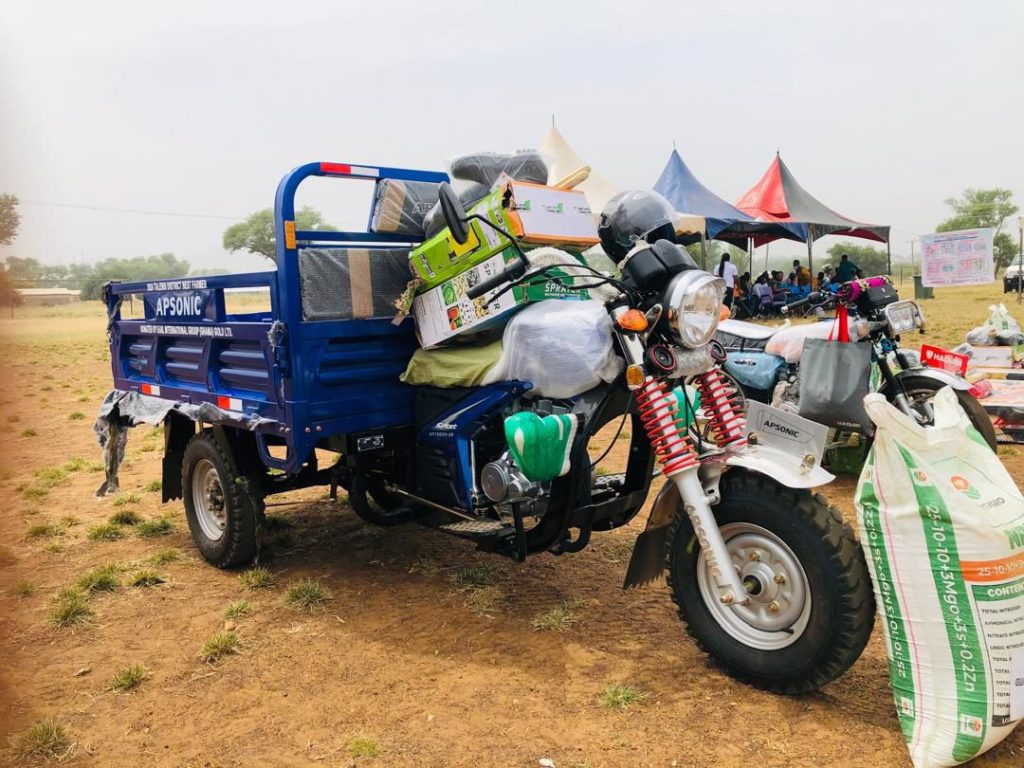
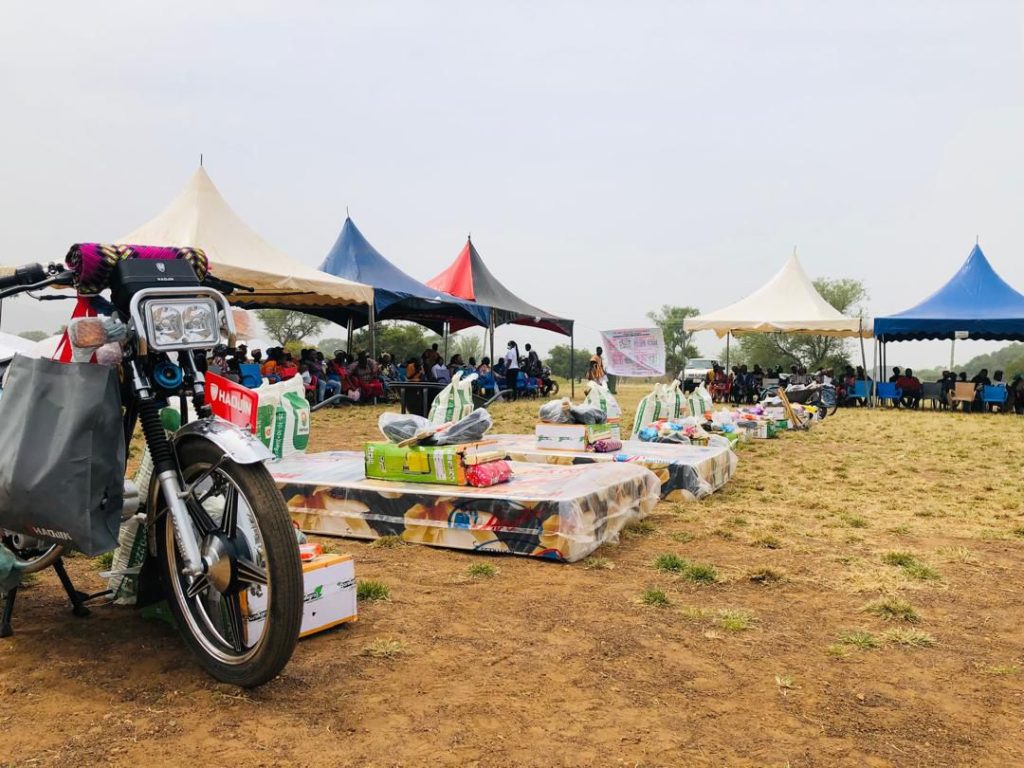
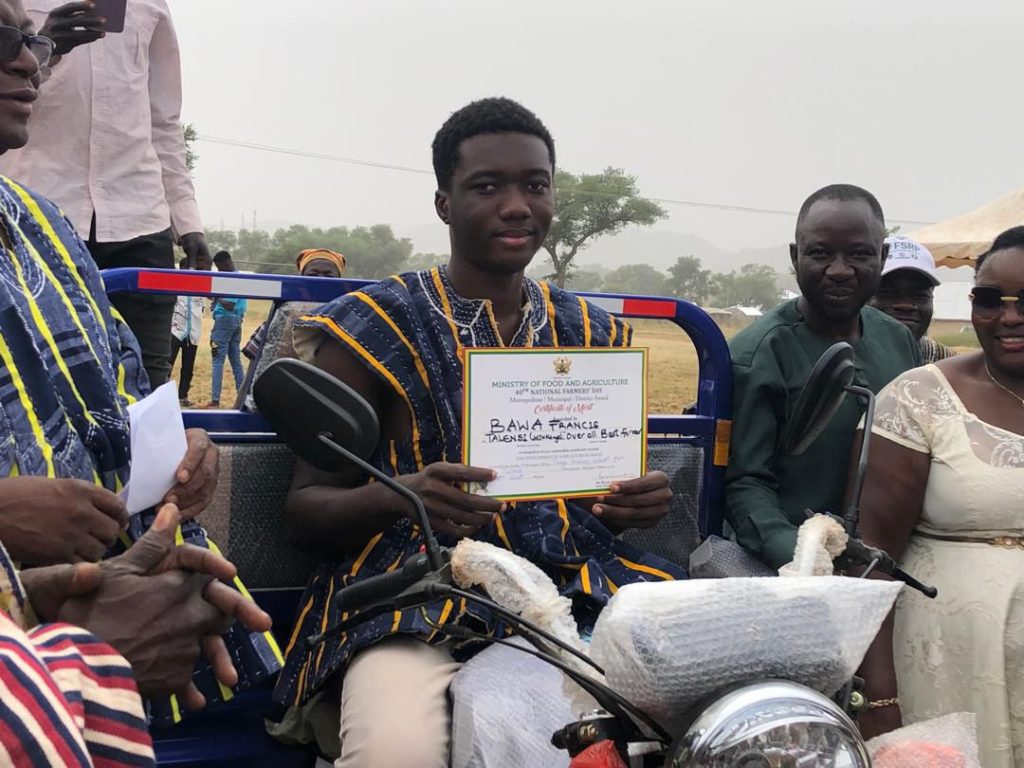
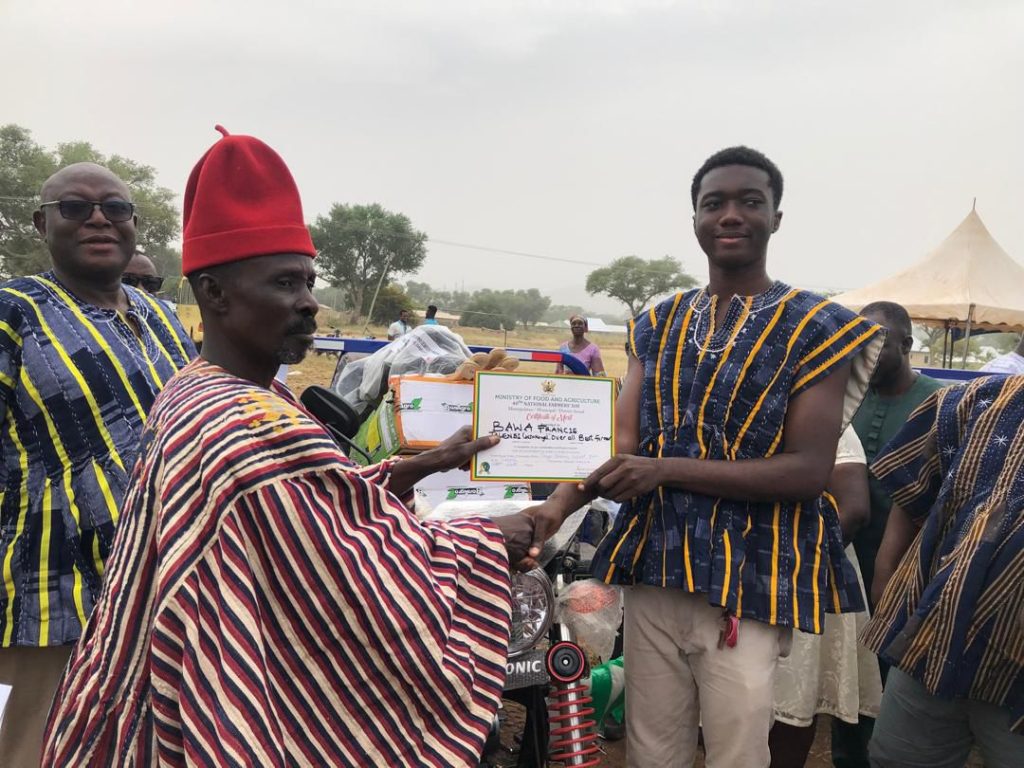
Mr. Bawa Francis, a farmer based in Winkogo, was awarded the overall best district farmer and will receive a tricycle motor, three pairs of Wellington boots, five cutlasses, two knapsack sprayers, and a certificate. Mr. Mathew also noted that the district has produced this year’s overall Upper East Regional best farmer and the best Agriculture Extension Agent, both of whom are attending the national celebration to receive their awards.
He urged farmers to work collaboratively rather than in isolation, emphasizing the importance of engaging with Agricultural Extension Officers to supervise their work, which will ultimately foster competition among farmers.
Source: mywordfmonline.com/Gaspard Ayuureneeya