
The Kassena Nankana West District Chief Executive (DCE), Mr. Stephen Aeke Akurugo, has officially launched the National Democratic Congress’s flagship Nkoko Nkitinkiti program. The initiative involves four out-growers and 100 farmers from across the district.
The Nkoko Nkitinkiti initiative aims to reduce chicken importation in Ghana and cut down the nation’s annual chicken import bill of $400 million.
The program is designed to create jobs, improve food security, increase protein accessibility for Ghanaian families, and generate sustainable livelihoods for poultry farmers and households.According to the DCE, four individuals have expressed interest in becoming out-growers.
They will rear chicks for about four weeks before distributing them to the 100 farmers who are the primary beneficiaries.
This initial rollout will focus on these four out-growers and 100 beneficiaries. As more supply becomes available, additional beneficiaries and out-growers can be identified to expand the program.Mr. Akurugo emphasized the importance of managing the initial rollout effectively to identify and address challenges before scaling up.
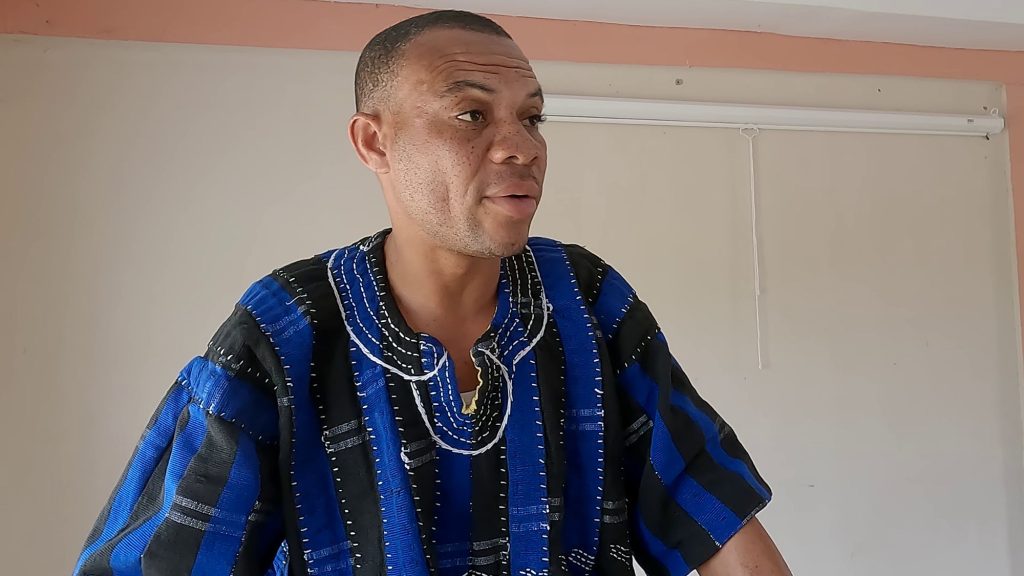
In an exclusive interview, one of the out-growers, Mr. Linus Nonterah from Yidania, expressed gratitude to the government for this initiative.
He noted that it would provide an opportunity for farmers to produce more and promote protein consumption, aligning with the president’s vision of improving dietary protein levels among Ghanaians. “This is something we have been doing for a while, and participating in this project will allow me to expand my efforts,” Mr. Nonterah stated.
The other out-grower sites in the Kassena Nankana district, located in Kajolo, Gawinia, and Kandiga Kurugu, were also inspected.
Mr. Mohammed Bukhari, the District Director of the Department of Agriculture for Kassena Nankana West, conducted inspections to evaluate the facilities of the selected out-growers who will receive day-old chicks from the Nkoko Nkitinkiti project.
He observed that while some structures still need completion, necessary resources such as litter, feeders, and waterers will be provided.
The program aims to supply each out-grower with between 2,500 and 3,000 birds to rear for four weeks, following which the birds will be distributed to the final beneficiaries.
Source:mywordfmonline.com/ Gaspard Ayuureneeya Adongo.